

About warm edge
The term warm edge describes the glazing edge of a mutli-pane insulating glass unit, in which the spacer bar between the panes of glass is made from a material with low thermal conductivity. That helps to reduce the thermal bridge from inside to outside – thus saving energy and avoiding the formation of mould on the glass edge.
Why you should opt for a warm edge in a window instead of aluminium products
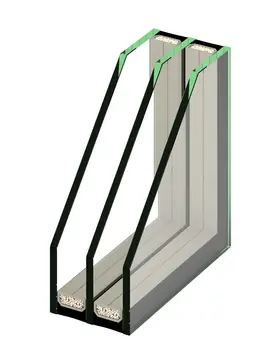
A small but effective component of every modern window is a so-called warm edge spacer bar. The spacer bar creates the physical contact between the panes of an insulating glass unit and is therefore decisive for a window’s thermal performance as a direct connection between indoors and outdoors. In contrast to products made from aluminium, warm edge spacer bars like Swisspacer are made from a highly insulating plastic composite material that minimises the loss of heat. Although the choice of spacer bar has an enormous impact on the energy efficiency of a window, aluminium spacer bars are still in use. That has a fatal impact on heating bills because metal is just about the best conductor of heat there is.
Did you know?
You can save up to 8.6% on heating energy and 340 kg of CO2 per year if your window contains Swisspacer.
Modern insulating glass units with warm edge
To achieve high thermal performance, multi-pane insulating glass units are used in windows as a rule. At the glass edge, spacer bars maintain the distance between the panes. The spacer bar thus defines the width of the so-called cavity between the panes. This is frequently filled with noble gas, in order to further improve the energy efficiency of the insulating glass unit.
If this spacer bar is made from materials with a low thermal conductivity, it is referred to as a warm edge. The warm edge is therefore optimised in terms of its thermal insulation, in order to minimise heat loss across the edge of double or triple glazing.
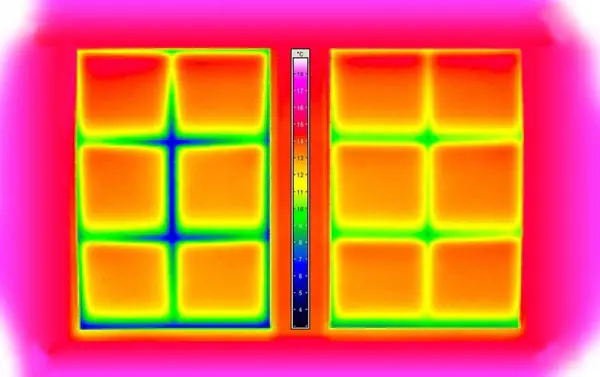
As the thermal imaging camera shows: in a window with aluminium spacer bars and decorative bars (left), the heat is lost precisely in the area of these connecting elements (blue). The window with Swisspacer warm edge spacer bars and Georgian bars shows much warmer edges.
Keep the cold at bay: reducing heat loss, condensation and discomfort at the window edge
When it is cold outside and warm inside a building, heat naturally flows outward through the window – particularly via the spacer bar and the edge of the insulating glass unit. This causes the temperature at the glazing edge to drop significantly compared to the centre of the glass.
As a result, additional heating energy is required to compensate for this heat loss. At the same time, the temperature difference on the inner glass surface creates thermal air movements, which can lead to uncomfortable draughts in the area close to the window.
If the temperature difference between indoors and outdoors is especially high, the glass edge can cool down to the dew point temperature. In this case, moisture from the indoor air condenses on the inside of the glazing. Persistent condensation can promote the growth of mould and bacteria, potentially damaging the window frame over time and posing health risks for occupants.
Warm edge spacer bars such as Swisspacer address this problem at its source. Unlike conventional aluminium spacer bars, Swisspacer is made from a highly insulating plastic composite material that significantly reduces heat loss at the glazing edge. By minimising thermal bridges in the insulating glass unit, warm edge technology helps to maintain higher inner surface temperatures – effectively preventing condensation, mould formation and associated long-term damage.
When heat should stay outside: cooling buildings efficiently with warm edge technology
Rising temperatures are no longer limited to tropical regions. Even in traditionally temperate climate zones, buildings increasingly require cooling to maintain indoor comfort. This leads to higher energy consumption, especially in air-conditioned buildings.
This is where Swisspacer warm edge spacer bars play an important role. By reducing thermal transfer at the edge of the insulating glass unit, Swisspacer limits the flow of heat from the outside into the building. As a result, the interior warms up more slowly, supporting more stable indoor temperatures during hot periods.
In practical terms, the inner glass surface and the edge of the insulating glass unit remain cooler than with conventional spacer systems. This effect is often referred to as a “cool edge”: the reduced heat ingress lowers the cooling load on air-conditioning systems, allowing them to operate more efficiently.
By improving thermal performance not only in winter but also in summer, Swisspacer contributes to lower cooling energy demand and reduced operating costs, particularly in buildings exposed to high solar loads or extended cooling periods.